Copied "this is private property" prompts fall apart because the clip needs a script, a timing plan and a set of rules about who speaks, and a pasted block of text covers none of that reliably. AI Meme Videos is an independent tool that builds all of it into one tap, so a private property AI video comes from a photo and a scene choice instead of a prompt you have to debug. This post explains why the pasted versions fail and what the site does about each failure, without handing out a recipe.
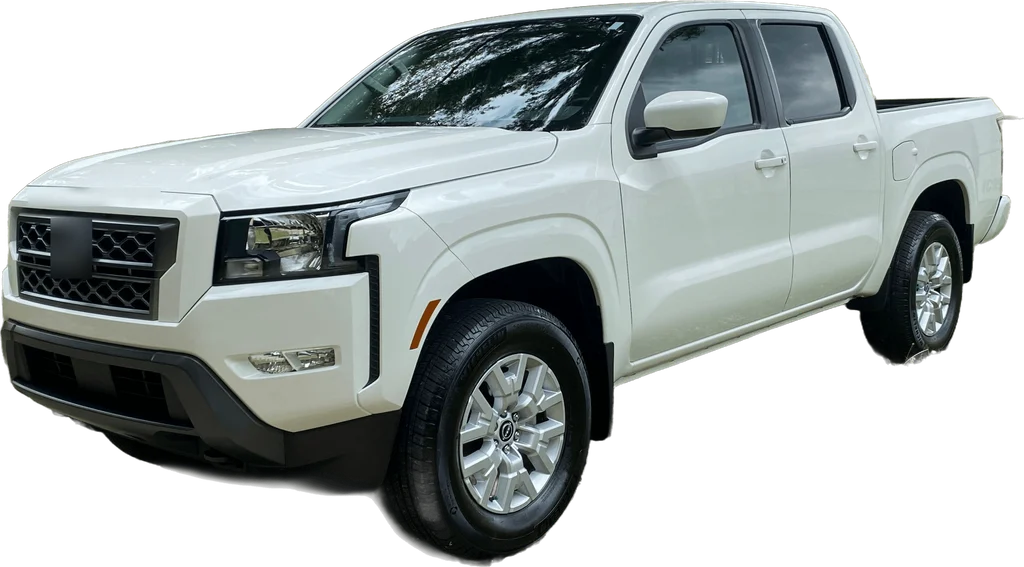
The meme is simple on the surface. An older man in a white pickup, window down, tells someone at a pond that they are not on state property. That simplicity is what fools people. The clip is four spoken lines, two voices, one long pause and a point down the road, all in 15 seconds. Each of those parts is a place where a general-purpose video model can go wrong.
Key takeaways
- A viral prompt is a snapshot of one lucky render, not a method. The same words give different clips on the next run.
- Five faults show up again and again: the on-screen person speaks the visitor's line, lines come out of order or twice, the eyebrow pause is rushed, the face drifts from the photo, and captions appear on screen.
- None of these is fixed by adding more words. They are fixed by structure: who may speak, when, and what must never appear.
- AI Meme Videos builds that structure in, using Seedance 2.0 from ByteDance. Likeness and lip sync are still not guaranteed, and the page says so.
What a pasted prompt is actually asked to do
A single 15-second render of this meme has to deliver the following, in order, with sound:
- A man in a driver seat notices someone off camera and asks who told them to fish there.
- A second voice, never seen, gives the excuse that it was state property.
- The man reacts without speaking: a raised eyebrow, a look around, a head shake.
- He speaks again in a rising run of short questions, then the verdict, then the line about private property.
- He points and holds the stare until the clip ends.
The exact words are on the hit the road dude meme page, and the second-by-second breakdown is on the trend explainer. What matters here is the shape. It is a small play with two speakers, silences that carry meaning, and a fixed running order. A prompt copied from a video description or a comment thread is usually a few sentences about a mood. A video model reads it as a mood and fills the gaps itself.
Those gaps are where the faults live.
The two-voice problem
The most common failure is also the most jarring. The man on screen delivers his own lines and then, without a change in his face, says the visitor's line too. Or the visitor's reply comes out in the same voice as the man's. The result sounds like one person arguing with himself.
This happens because a video model that generates picture and sound together ties speech to faces. If there is a face in the frame and there is dialogue in the request, the safest guess for the model is that the face is the one talking. A second speaker who is not visible is an unusual instruction. There is no mouth to attach it to, so the model either gives the line to the mouth it has or invents a second person on camera.
What AI Meme Videos does about it:
- The visitor is defined as a voice only. No face, no body and no second mouth are part of the scene.
- The owner's mouth is told to stay closed while that voice speaks, which is the same beat you see in the original clip, where the man simply listens.
- The visitor's reply is short and fixed per scene, so there is little room for the model to rewrite it.
You will still sometimes see a render where the mouth twitches on the reply. That is a limit of current AI video, not a setting. Fixing a mouth that moves on the visitor's line is a matter of rendering again or choosing a different photo, which is the whole reason the tool has no text box.
Lines out of order, and lines said twice
The second fault is about sequence. People report clips where the verdict comes first and the opening question arrives at the end, clips where "Hit the road, dude" is said twice, and clips where the "State? This? State?" run collapses into a single word.
The cause is that a model treats a list of lines in a prompt as material, not as a timeline. If the request does not say which line belongs to which part of the 15 seconds, the model spreads them as it sees fit. A line that sounds like a strong ending can be pulled forward. A repeated word such as "State" can be heard as a stutter to remove or as a hook to repeat.
The structure the original clip uses is rigid, and the rigidity is the joke. There are five beats: the stop, the excuse, the disbelief, the verdict and the stare. The site's own beat sheet gives each one a time window. A pasted prompt that lists the lines without those windows is asking the model to guess the choreography.
What AI Meme Videos does about it:
- Every line is attached to a beat, and every beat to a time window inside the 15 seconds.
- Only the first line changes by scene, from "Who told you to fish here?" to "Who told you to cut across my lawn?" or "Who told you to tie up here?". The other three stay the same, which keeps the structure steady across all six scenes.
- The last two seconds are silent by design, so the model has no spare time in which to repeat the verdict.
A repeat or a swap can still occur, because the model is generating, not playing back. When it does, the answer is to render again. Failed renders return their credits automatically, and a render that finishes but comes out wrong is a new draw with the same built-in structure.
The eyebrow pause gets rushed
If you have watched the original, you know the pause. The excuse lands, and for a few seconds the man does nothing but think. One eyebrow goes up. He looks around. Then the run of short questions begins. That stretch is where the comic timing lives, and it is the part that disappears first when a model is left to its own pacing.
Video models are trained to keep things moving. Given 15 seconds and a lot of dialogue, they compress silences, because a silence looks like wasted time. The usual symptoms are an eyebrow that flickers and is gone, a head turn that is half finished, or a skipped look-around, with the questions starting almost on top of the excuse.
What AI Meme Videos does about it:
- The disbelief beat has its own window of four seconds, from about 5.0 to 9.0, and the gestures inside it are specified as actions: the eyebrow, the look, the slow head shake.
- The voices are timed around the silence, not the other way round, so the model has to leave room.
- The closing stare is held for two seconds so the clip ends on a still, readable frame and loops cleanly.
Identity drift from the photo
The fourth fault is the one that bothers people most, because the face is the whole point. You upload a photo of yourself or a friend, and the person in the truck is almost them. Slightly older, slightly different jaw, a different hairline, or a generic "pickup driver" face with your outfit.
Photo-to-video models carry identity from the first frame and must hold it while the head turns, the mouth moves and the eyebrow rises. The further a frame gets from the photo, the more the model leans on its own idea of a face, and this meme asks for a head turn, a lean and a point.
What AI Meme Videos does about it:
- The photo is the identity and the scene text describes the place, not the person, so the model is not asked to choose between your face and a description.
- Each scene is filmed from a fixed angle, which is why the scene pages give photo tips per scene, such as skipping sunglasses for the Golf Cart.
- Your outfit comes from the photo, and nothing is added to it.
Likeness is not guaranteed, and the site does not claim it. A sharp, front-facing, evenly lit photo gives the best chance; a different photo is the first fix to try. Pets have not been tested across the scenes, so a pet render may not hold together.
Captions and subtitles that appear on their own
Many pasted versions return a clip with subtitles burned into the bottom of the frame, often with garbled letters. Others add a watermark-like logo, a fake channel name or road signs with nonsense text.
It happens because dialogue and captions go together in a lot of the video a model has seen. When the request contains quoted speech, a generated clip often paints that speech on screen. Text is also one of the weakest areas of image and video generation, so what appears is rarely clean.
What AI Meme Videos does about it:
- The built-in instructions state that no captions, subtitles, logos or readable text may appear. The scenes themselves are chosen to have no badges or signage, and the Tractor, for example, is a generic machine with no brand mark.
- If you want text on the clip, you add it yourself in the app where you post. That is better for the platform anyway, because on-platform captions are searchable and are placed clear of the interface.
If a stray letter or a shape that looks like a sign does slip in, it is a render quirk. Render again. It is rare, but with a generative model it is never zero. Where to put your own hook text is covered in the guide to posting the clip on TikTok, Reels and Shorts.
What the site handles, and what it cannot promise
None of the five faults is a wording problem. They are structural: who speaks, in what order, with what silences, over which face, with what on screen. A prompt can only point at these things. A finished product has to enforce them and keep the scene set small enough that the same structure works every time.
That is why AI Meme Videos does not show its internal instructions and does not ask for a prompt. The prompt page explains our reasoning, the how-to page shows the three-step flow that replaces it, and the filter page says what we have and have not found. The meme itself is covered on the hit the road dude AI page.
The limits, stated plainly:
- There is no free tier. The smallest pack is $9.99 for 10 credits, enough for one 480p clip. See pricing for 720p at 22 credits and 1080p at 40.
- Likeness is not guaranteed and depends on the photo.
- Lip sync is close but not frame-exact.
- The voices are synthetic, they vary between renders and they are not the voice of anyone in the original video.
- Small details such as hands and the pointing arm can change between frames.
- Pet photos have not been tested.
- A failed render returns its credits. An unused pack can be refunded within 7 days.
The clip is made with Seedance 2.0 by ByteDance, comes back as an MP4 with AI-generated dialogue, and stays downloadable for 7 days. AI Meme Videos is independent and not affiliated with the people in the original video, the account that posted it or TikTok.
When you are ready, make your clip here.
Frequently asked questions
Why does the man in my clip say the visitor's line too?
The man says the visitor's line because AI Meme Videos is working with a video model that tends to give speech to any visible face, and an unseen second voice is an unusual case. Render again and the mouth usually behaves. A different photo or scene also changes the result. A failed render costs nothing, and a finished one uses 10, 22 or 40 credits.
Can I copy the prompt from a viral post and get the same clip?
No, a copied prompt will not reliably give the same clip, and AI Meme Videos does not publish or need one. The same words produce a different render each time, and none of them fixes the order of lines, the silent pause or on-screen text. The tool builds that structure in for 6 scenes and 15 seconds, from one photo.
Why does the clip sometimes come out without the long eyebrow pause?
The pause can come out short because video models compress silence, and no render is identical to the original. AI Meme Videos gives the disbelief beat a window of about 4 seconds and holds the stare for the last 2, but lip sync and timing are close, not frame-exact. If it feels rushed, render again or pick another scene.
Will subtitles or logos ever be burned into my clip?
Rarely, but it is not impossible. AI Meme Videos tells the model to show no captions, subtitles, logos or readable text, and the 6 scenes avoid brand marks. Generative video can still produce a stray letter. If you see one, render again; a failed render returns its credits automatically. Add your own captions in the app where you post.
Does AI Meme Videos copy the voice from the original video?
No. AI Meme Videos uses none of the original audio or footage. The dialogue and the outdoor sound in every 15-second MP4 are AI-generated by Seedance 2.0 from ByteDance, so the voices are synthetic and vary a little between renders. They are not the voice of anyone in the original video, and the site is not affiliated with them.